
Woolly Worm Winter Chart
Woolly Worm Winter Chart - Web here's a lovely book with over 100 color images about the wooly bear caterpillar. White woolly worms are said to predict winter snowfall. According to folklore, a narrow orange band on the caterpillar signals a snowy winter, while a wide band suggests a mild one. Web every year, the wooly worms look different—and it depends on their region. If the wooly bear is traveling north, it indicates the winter will be mild. Web most people in the midwest or new england have heard at one time or another that if you want a forecast for the upcoming winter that you should just look for a woolly bear (black at both ends and a reddish brown or rust colored in the middle) or fuzzy bear caterpillar. Web here’s what their colors say about the upcoming winter. If you spot a woolly worm (wolly bear) take a close look at its colors, weather lore says they can predict. Web in late fall, woolly worms go through a wandering period that is most noticeable as they cross sidewalks and roads. Although that folklore has been passed down for centuries, experts say it's unlikely. Eventually, the woolly worm burrows into the leaf litter or crawls under a log, piece of bark, or rock. So, if you come across a local woolly worm, observe the colors of the bands and what they foretell about your winter weather. At that time, the official winter forecast will be declared. Web here’s what their colors say about the upcoming winter. Web woolly bear caterpillars, also known as woolly worms or woolly bears, are actually the larvae of the isabella tiger moth (pyrrharctia isabella). The caterpillars commonly show high variability in their coloration based on their age, food sources, and moisture levels in the area where they develop. Web they begin their worm races around 10:20 am, or as soon as the first heat, on saturday morning. Web as you know, a lot of people swear that the color and pattern of woolly worms can be used predict winter weather. Web more rigorous research subsequently debunked the winter weather prediction value of banded woolly bears. Most people have heard about how this little larva can predict just how bad the winter will be. Eventually, the woolly worm burrows into the leaf litter or crawls under a log, piece of bark, or rock. The sunday worm races are for prestige, fun and small prizes. A mostly brown worm signifies a milder winter. Although that folklore has been passed down for centuries, experts say it's unlikely. Many variables may contribute to changes in the caterpillar's. Web most people in the midwest or new england have heard at one time or another that if you want a forecast for the upcoming winter that you should just look for a woolly bear (black at both ends and a reddish brown or rust colored in the middle) or fuzzy bear caterpillar. According to folklore, the woolly bear caterpillar. Web can the black hairs of this woolly bear caterpillar really tell us how mild or severe winter will be? In the fall, these caterpillars start their annual crawls in search of sheltered quarters for winter. Scientific studies on worm forecasting are few and far between. According to folklore, a narrow orange band on the caterpillar signals a snowy winter,. Web can the black hairs of this woolly bear caterpillar really tell us how mild or severe winter will be? Web most people in the midwest or new england have heard at one time or another that if you want a forecast for the upcoming winter that you should just look for a woolly bear (black at both ends and. Web as you know, a lot of people swear that the color and pattern of woolly worms can be used predict winter weather. Web if the wooly bear is traveling south, it is trying to escape a cold winter. For those who are outside raking, they often discover the furry, black and rusty brown wooly worm. Web “this past winter. Web today, entomologists agree that woolly worms are not accurate predictors of winter weather. Web the banded woolly bear, also known as the woolly worm caterpillar, is considered a natural indicator for predicting winter weather (ranking #18 on our list of 20 signs of a harsh winter). In the fall, these caterpillars start their annual crawls in search of sheltered. Web they begin their worm races around 10:20 am, or as soon as the first heat, on saturday morning. So, if you come across a local woolly worm, observe the colors of the bands and what they foretell about your winter weather. Web “this past winter was absolutely spot on.” can woolly worms really predict the weather? If so tell. Web if the wooly bear is traveling south, it is trying to escape a cold winter. Web “this past winter was absolutely spot on.” can woolly worms really predict the weather? If he’s headed south, get ready for a long cold winter. Web according to the theory, mainly black wooly worms predict a harsher winter. Although that folklore has been. So, if you come across a local woolly worm, observe the colors of the bands and what they foretell about your winter weather. Web if the wooly bear is traveling south, it is trying to escape a cold winter. Web more rigorous research subsequently debunked the winter weather prediction value of banded woolly bears. Have you noticed these weather predictors. If he’s headed south, get ready for a long cold winter. Eventually, the woolly worm burrows into the leaf litter or crawls under a log, piece of bark, or rock. They’ll hibernate in that location over the winter. And if there is more orange/brown than black, you can. Many variables may contribute to changes in the caterpillar's coloration, including larval. Web as you know, a lot of people swear that the color and pattern of woolly worms can be used predict winter weather. Web in late fall, woolly worms go through a wandering period that is most noticeable as they cross sidewalks and roads. According to folklore, the woolly bear caterpillar can predict the severity of the coming winter. Web here’s what their colors say about the upcoming winter. The winning worm on saturday is declared the official winter forecasting agent. Web can the black hairs of this woolly bear caterpillar really tell us how mild or severe winter will be? Many variables may contribute to changes in the caterpillar's coloration, including larval stage, food availability, temperature or moisture during development, age, and even species. So, if you come across a local woolly worm, observe the colors of the bands and what they foretell about your winter weather. They’ll hibernate in that location over the winter. Web “this past winter was absolutely spot on.” can woolly worms really predict the weather? And if there is more orange/brown than black, you can. Web more rigorous research subsequently debunked the winter weather prediction value of banded woolly bears. The more black there is, the more severe the winter. Web the woolly worm races begin around 10:00 a.m. The more black bands the critter has the harsher the winter conditions will be. Web with the fall weather comes garden and yard cleanups.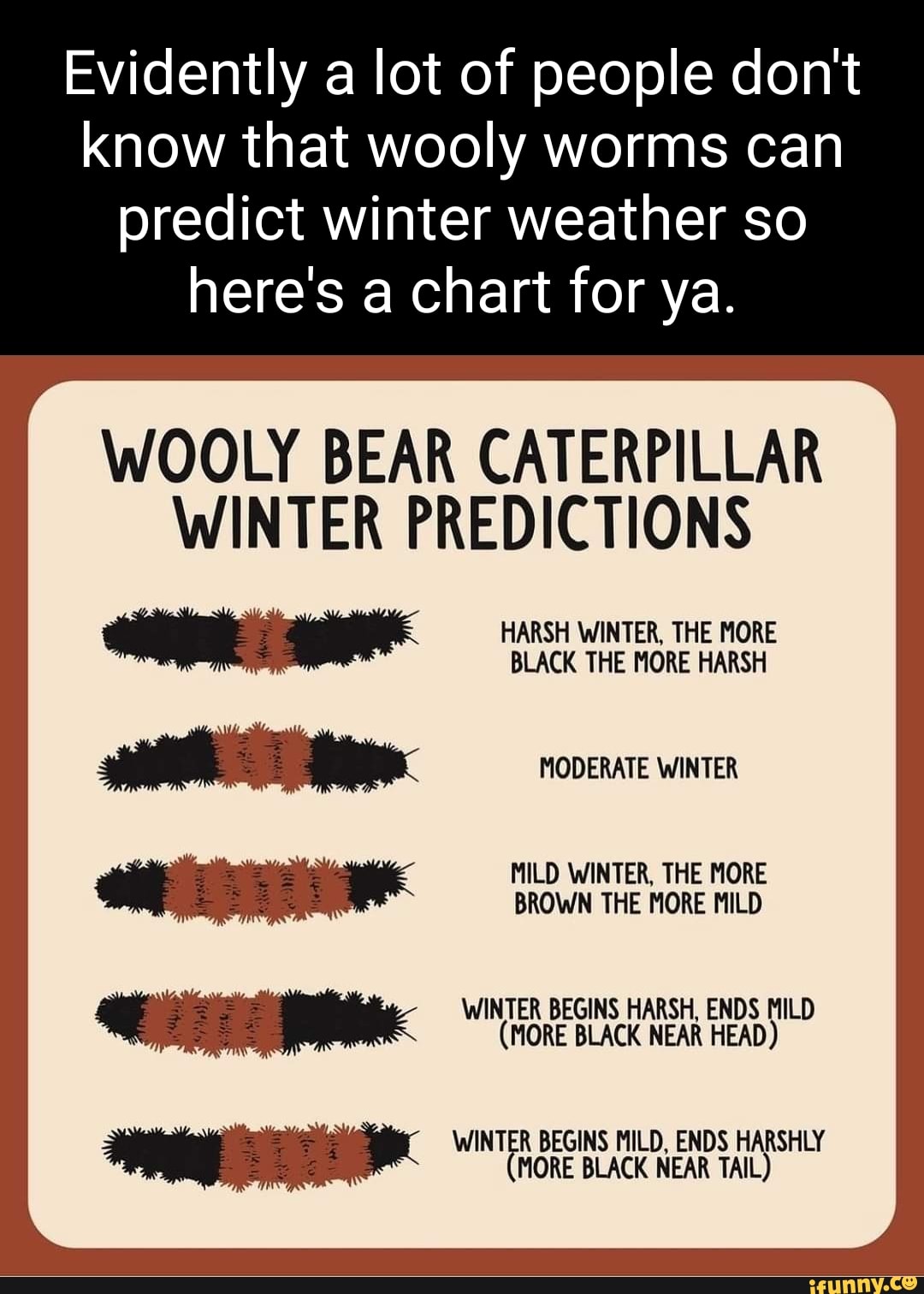
Evidently a lot of people don't know that wooly worms can predict

Wooly caterpillar winter prediction True Price Prediction

Woolly Worm Winter Chart
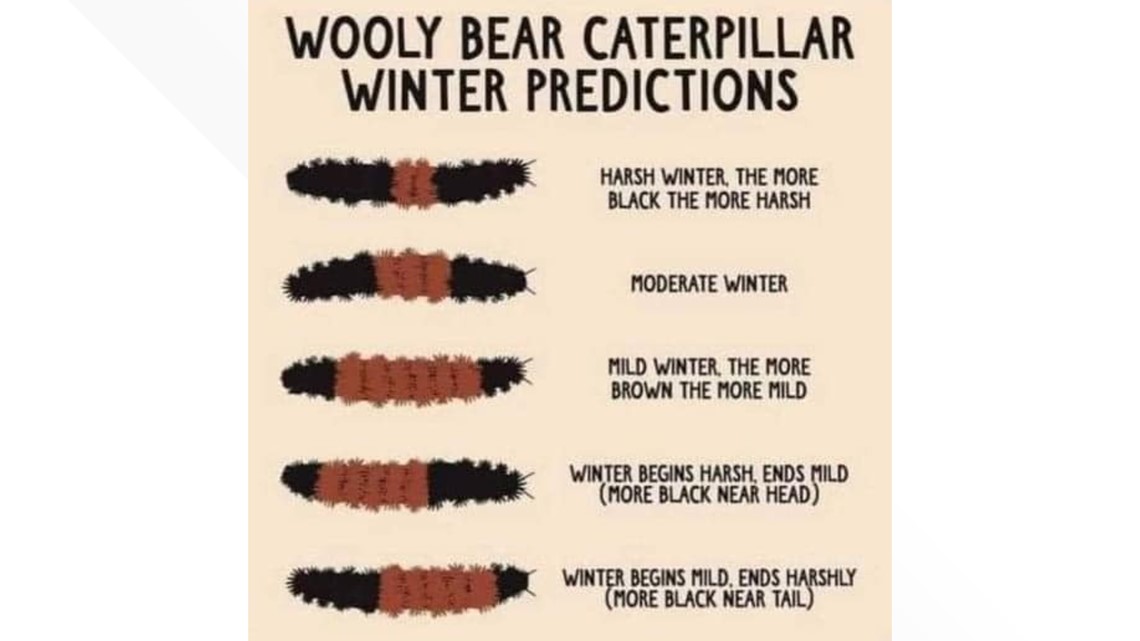
Wooly Caterpillar Winter Prediction Chart
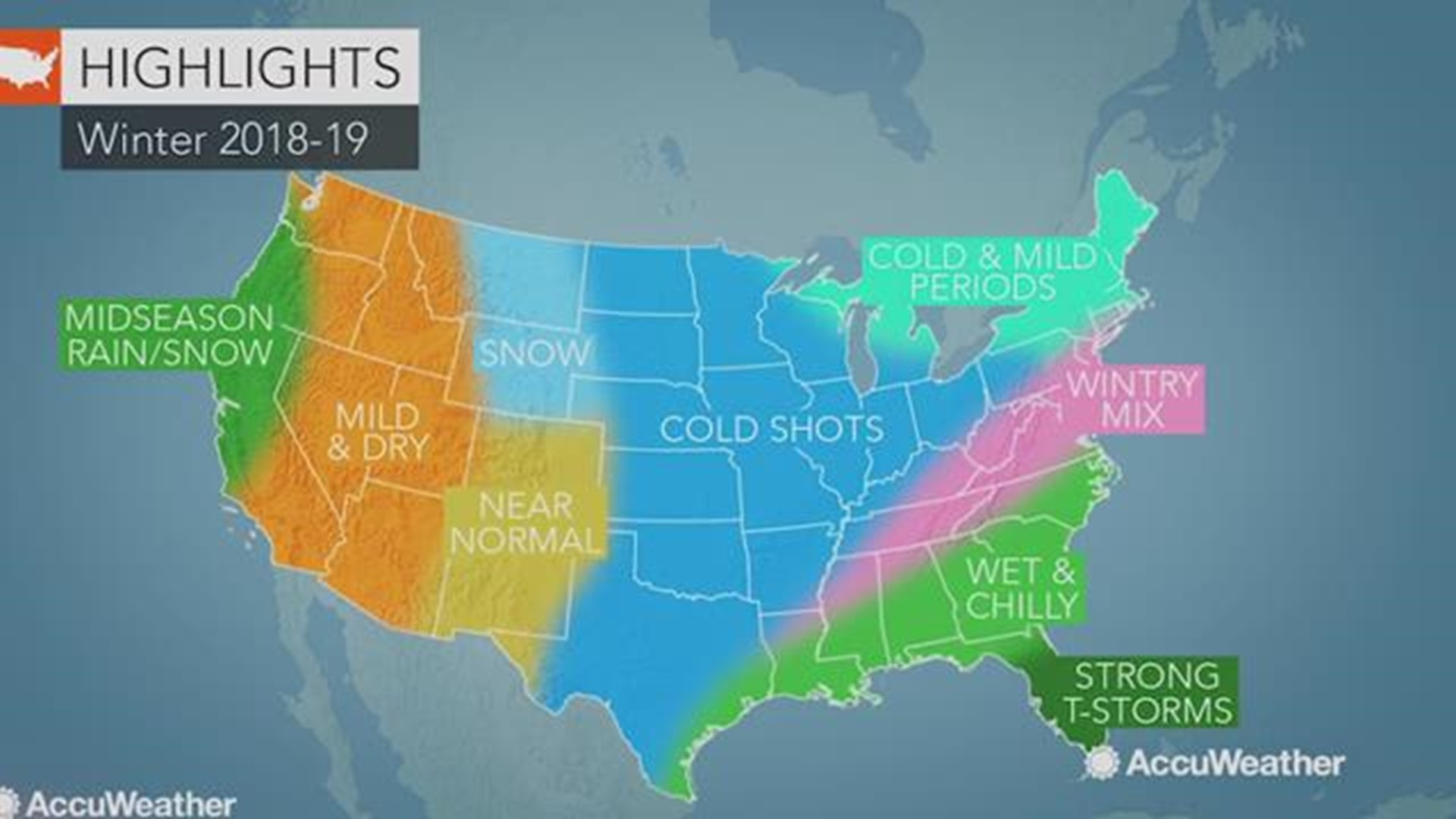
Folksy Winter Predictions Persimmons and woolly worms call for cold

Wooly Caterpillar Winter Chart
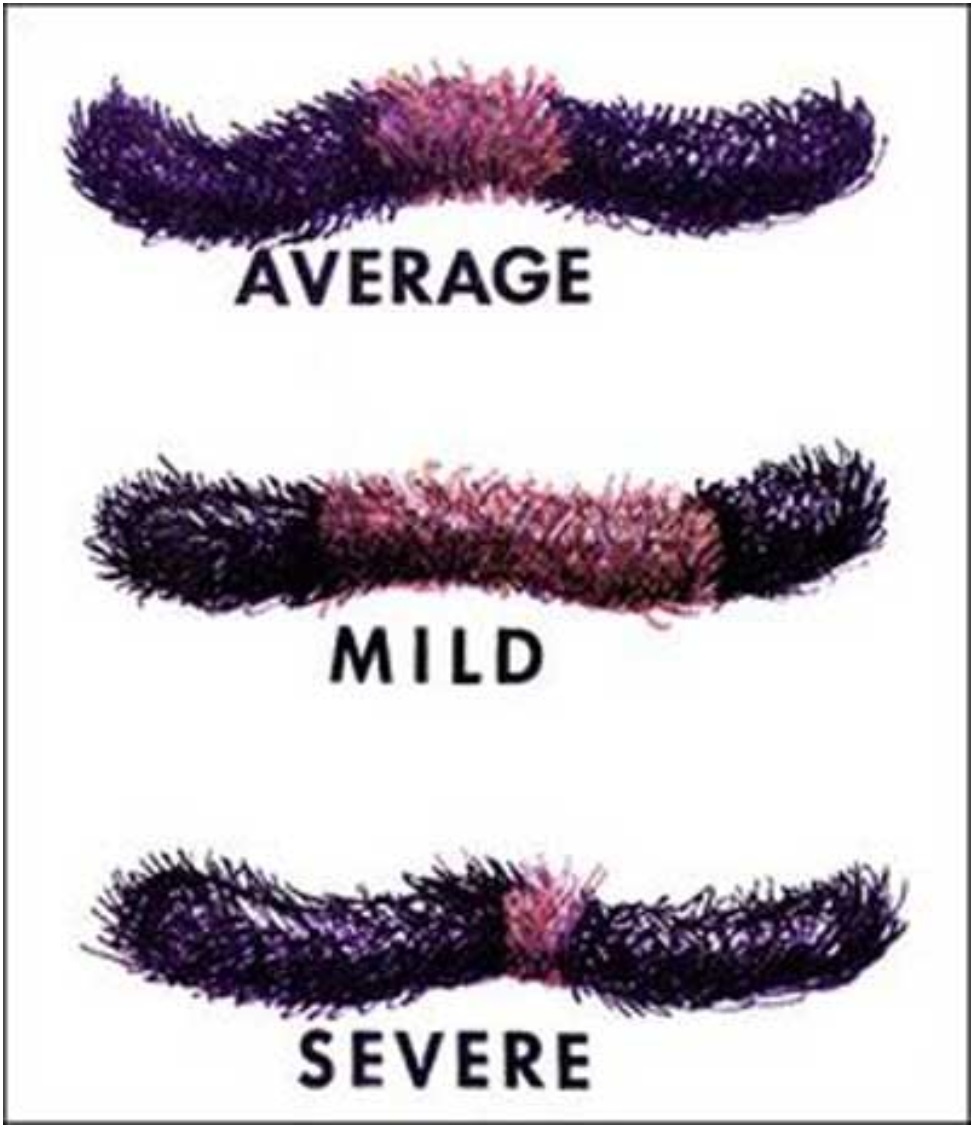
Woolly Bear Caterpillars Fact or Legend? Dyken Pond Environmental
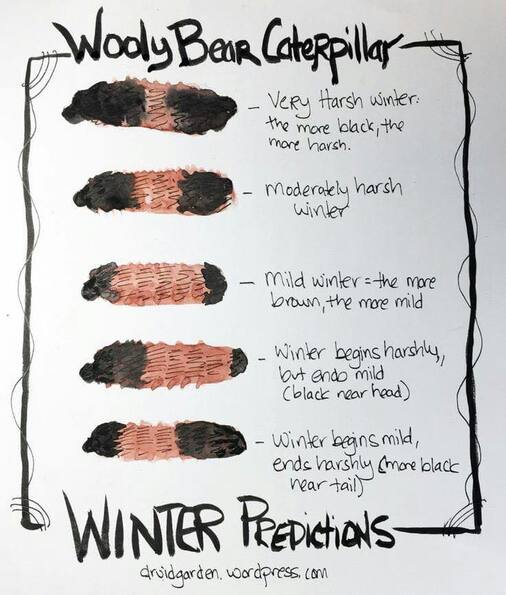
Woolly Bear Caterpillar Winter Weather Forecasters? Megan Betcher
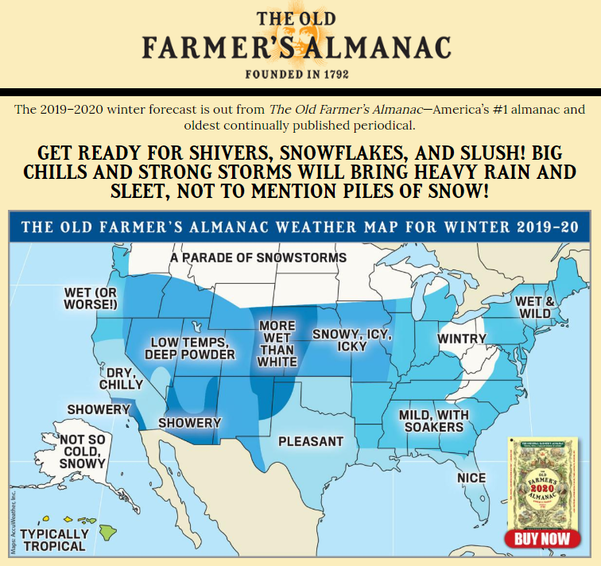
Woolly Bear Caterpillar Winter Prediction Chart
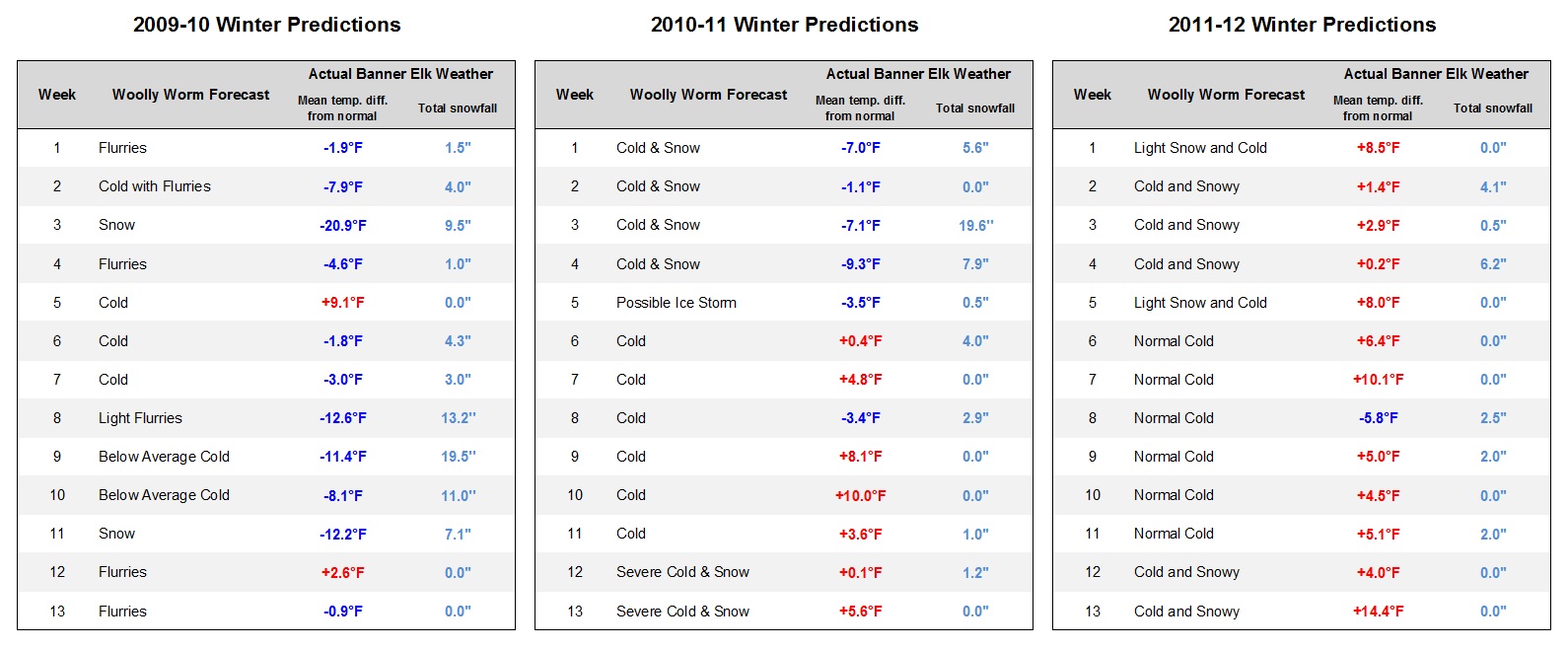
Woolly Worm Weather Prediction Chart
According To Folklore, A Narrow Orange Band On The Caterpillar Signals A Snowy Winter, While A Wide Band Suggests A Mild One.
Web Here's A Lovely Book With Over 100 Color Images About The Wooly Bear Caterpillar.
Web They Begin Their Worm Races Around 10:20 Am, Or As Soon As The First Heat, On Saturday Morning.
Races Continue All Day Until The Grand Final About 4 Pm When The Champion Worm And Trainer Is Crowned (And Paid!).
Related Post: