
Eriksons Psychosocial Stages Summary Chart
Eriksons Psychosocial Stages Summary Chart - From infancy to late adulthood, each stage presents unique challenges and opportunities for personal development. 18 months) mistrust important events outcome feeding children develop a sense of trust when caregivers provide reliabilty, care, and affection. Learn more in this chart summarizing erikson's stages of psychosocial development. If an infant needs something, they will cry. The infant must form a first loving, trustingrelationship with the caregiver, or develop a sense of mistrust. Successfully resolving the conflicts leads to virtues like hope, will, purpose, and integrity. Because an infant is utterly dependent, developing trust is based on the dependability and quality of the child's caregivers. Learn more in this chart summarizing erikson's stages of psychosocial. Erikson believed that the first stage of psychosocial development was centered on answering this important question. Have i lived a full life? Web reflection on life teens needs to develop a sense of self and personal identity. In reality, however, it is impossible to separate them completely. In the first 18 months of a child’s life, they need food, comfort, and other basic necessities their mother provides. Web erikson’s (1959) theory of psychosocial development has eight distinct stages, taking in five stages up to the age of 18 years and three further stages beyond, well into adulthood. At each stage, individuals face a conflict between two opposing states that shapes personality. Erik erikson described development that occurs throughout the lifespan. Erikson believed that the first stage of psychosocial development was centered on answering this important question. Web erikson’s theory outlines 8 stages of psychosocial development from infancy to late adulthood. Note that the age ranges below are indicative of the stages described by erikson and vary across the literature. Web download and print this handy psychosocial development summary chart to help you learn more about some of the highlights of erikson's famous theory. Thechild's energies are directed toward the development of physical skills,including walking, grasping, and rectal sphincter control. The infant must form a first loving, trustingrelationship with the caregiver, or develop a sense of mistrust. 18 months) mistrust important events outcome feeding children develop a sense of trust when caregivers provide reliabilty, care, and affection. Web learn more in this chart summarizing. Stagnation, according to erik erikson's psychosocial development theory. Stage basic conflict important events (1)infancy (birth to 18 months) trust vs. This essay about erik erikson’s theory of psychosocial development outlines the eight stages of human growth, emphasizing the role of social experiences throughout life. Young adults need to form intimate, loving relationships with other people. Learn more in this chart. The impact of child abuse and neglect is often discussed in terms of physical, psychological, behavioral, and societal consequences. By resolving it, we develop. Latency or school age stage. Maturity (65 to death) ego identity vs. Web during middle adulthood, which typically spans from the ages of 40 to 65, individuals experience the stage of generativity vs. Web erik erikson’s psychosocial development theory proposed that throughout our lives, we encounter certain crises that contribute to our psychosocial development. Successfully resolving the conflicts leads to virtues like hope, will, purpose, and integrity. Each stage is characterized by a psychosocial crisis between two opposing tendencies that must be resolved. Have i lived a full life? Success leads to an. Erik erikson1 described development that occurs throughout the lifespan. Learn more in this chart summarizing erikson's stages of psychosocial. Stagnation, according to erik erikson's psychosocial development theory. From infancy to late adulthood, each stage presents unique challenges and opportunities for personal development. Web erikson’s theory outlines 8 stages of psychosocial development from infancy to late adulthood. The two conflicting forces each have a psychosocial crisis which characterizes the eight stages. Web download and print this handy psychosocial development summary chart to help you learn more about some of the highlights of erikson's famous theory. Thechild's energies are directed toward the development of physical skills,including walking, grasping, and rectal sphincter control. Learn more in this chart. Erikson. This essay about erik erikson’s theory of psychosocial development outlines the eight stages of human growth, emphasizing the role of social experiences throughout life. Relationship between the victim and his or her abuser (chalk, gibbons, & Web erikson’s (1959) theory of psychosocial development has eight distinct stages, taking in five stages up to the age of 18 years and three. Older adults need to look back on life and feel a sense of fulfillment. Web erikson’s theory outlines 8 stages of psychosocial development from infancy to late adulthood. Web learn more in this chart summarizing erikson's stages of psychosocial development. Learn more in this chart summarizing erikson's stages of psychosocial. 18 months) mistrust important events outcome feeding children develop a. Summarizing erikson's stages of psychosocial development. Successfully resolving the conflicts leads to virtues like hope, will, purpose, and integrity. Mistrust feeding children develop a sense of trust when caregivers provide reliability, care,. Web success leads to feelings of usefulness and accomplishment, while failure results in shallow involvement in the world. Web reflection on life teens needs to develop a sense. Web the diagram below represents erikson’s eight psychological stages and the tensions most relevant at particular stages of the lifespan (modified from syed & mclean, 2018). Erikson's stages of psychosocial development. Web erik erikson described development that occurs throughout the lifespan. Successfully resolving the conflicts leads to virtues like hope, will, purpose, and integrity. Like freud and many others, erik. At each stage, individuals face a conflict between two opposing states that shapes personality. Web success leads to feelings of usefulness and accomplishment, while failure results in shallow involvement in the world. Older adults need to look back on life and feel a sense of fulfillment. Erikson believed that the first stage of psychosocial development was centered on answering this important question. The mother is a key figure in the trust vs. Is the world safe and predictable or dangerous and chaotic? Note that the age ranges below are indicative of the stages described by erikson and vary across the literature. Summarizing erikson's stages of psychosocial development. By resolving it, we develop. Web erikson's stage theory characterizes an individual advancing through the eight life stages as a function of negotiating their biological and sociocultural forces. Feeding children develop a sense of trust when caregivers provide reliabilty, care, and affection. Web erikson’s (1959) theory of psychosocial development has eight distinct stages, taking in five stages up to the age of 18 years and three further stages beyond, well into adulthood. The infant must form a first loving, trustingrelationship with the caregiver, or develop a sense of mistrust. The impact of child abuse and neglect is often discussed in terms of physical, psychological, behavioral, and societal consequences. Like freud and many others, erik erikson maintained that personality develops in a predetermined order, and builds upon each previous stage. How individuals navigate each crisis impacts their development and influences their behavior and relationships in subsequent stages.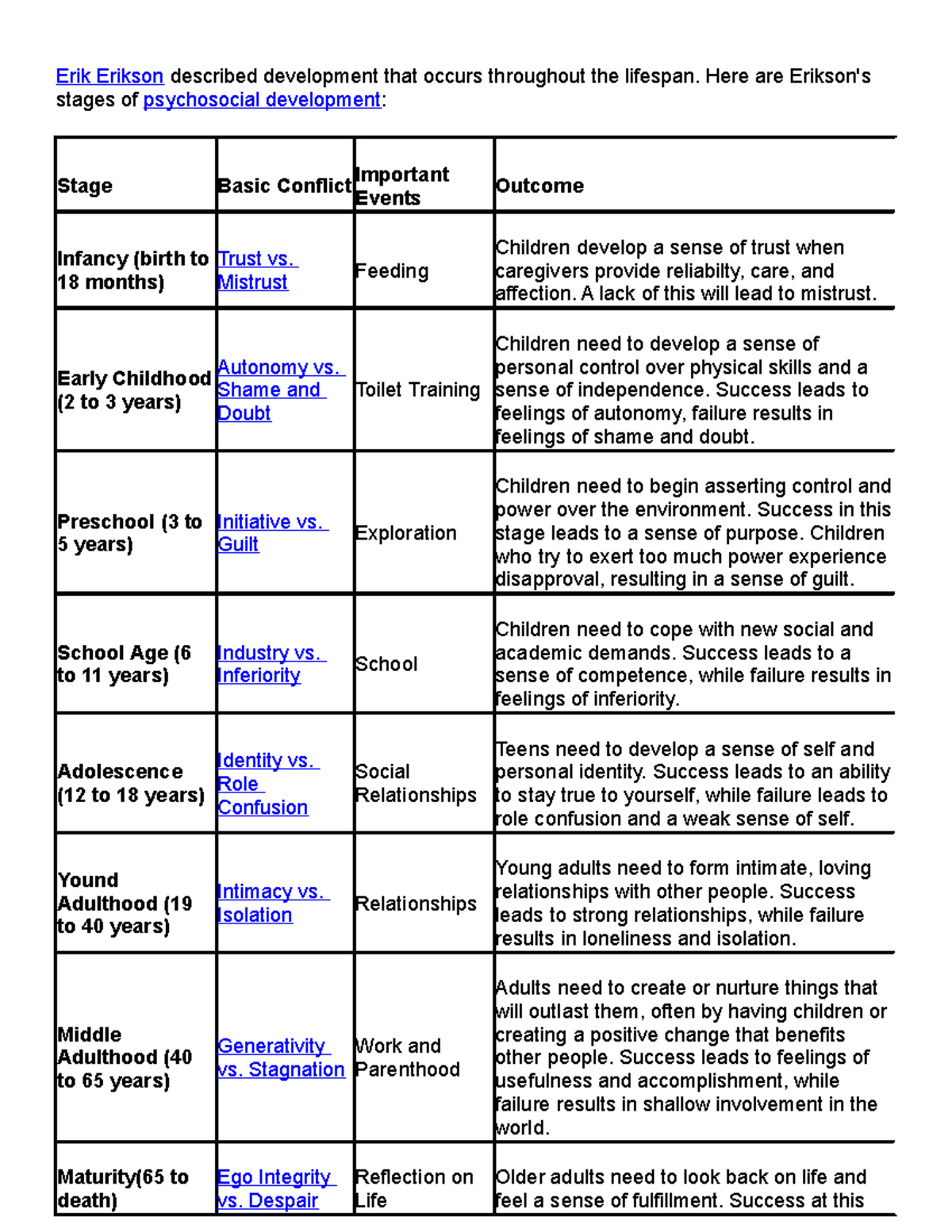
Erikson Psychosocial Development Stages

Erikson's Psychosocial Stages Summary Chart
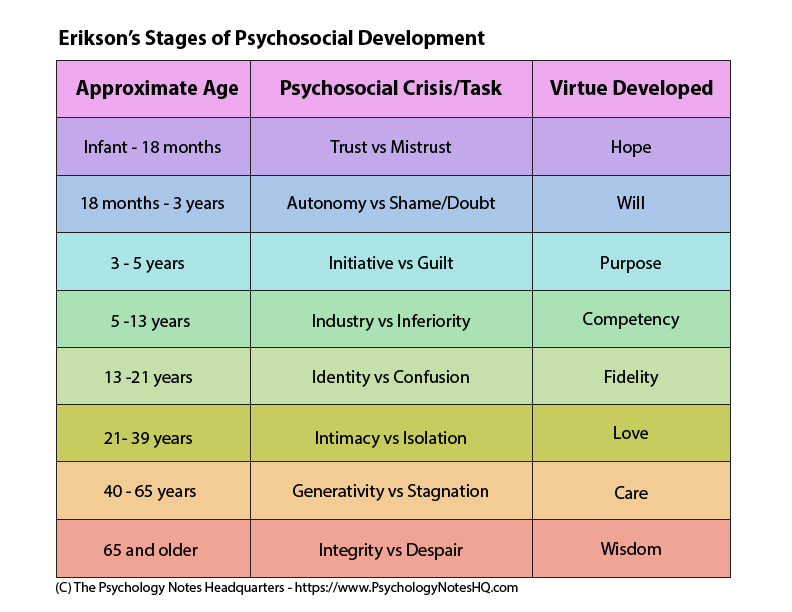
Erikson’s 8 Stages of Psychosocial Development PayPerVids
:max_bytes(150000):strip_icc()/2795740-article-erik-eriksons-stages-of-psychosocial-development-5ac3df9e875db90037ffa803.png)
Erik Erikson's Stages of Psychosocial Development
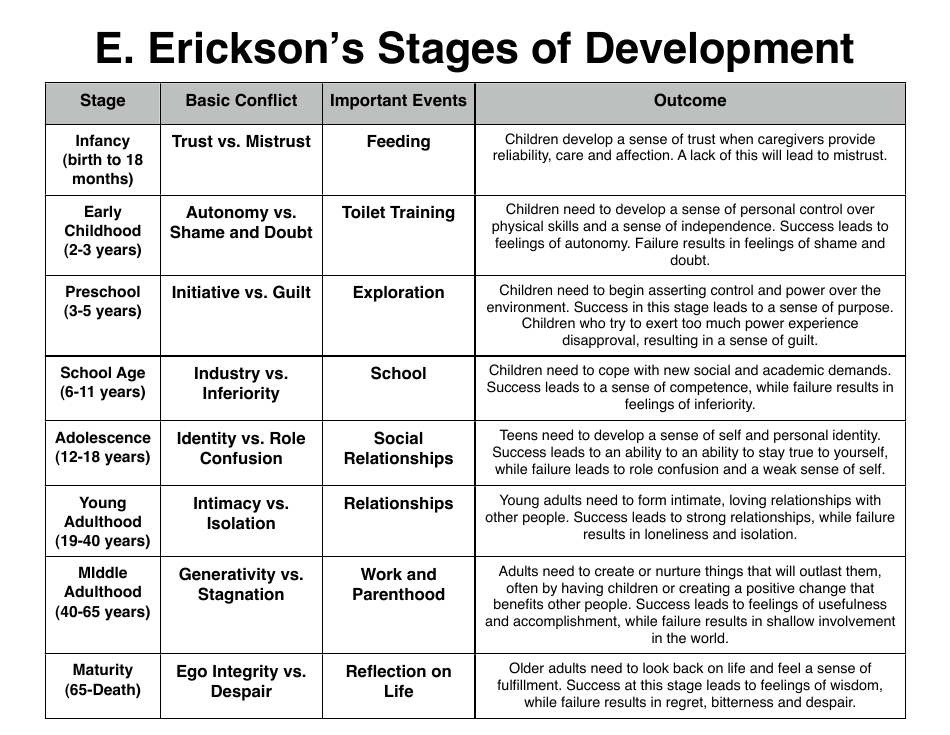
Erikson S 8 Stages
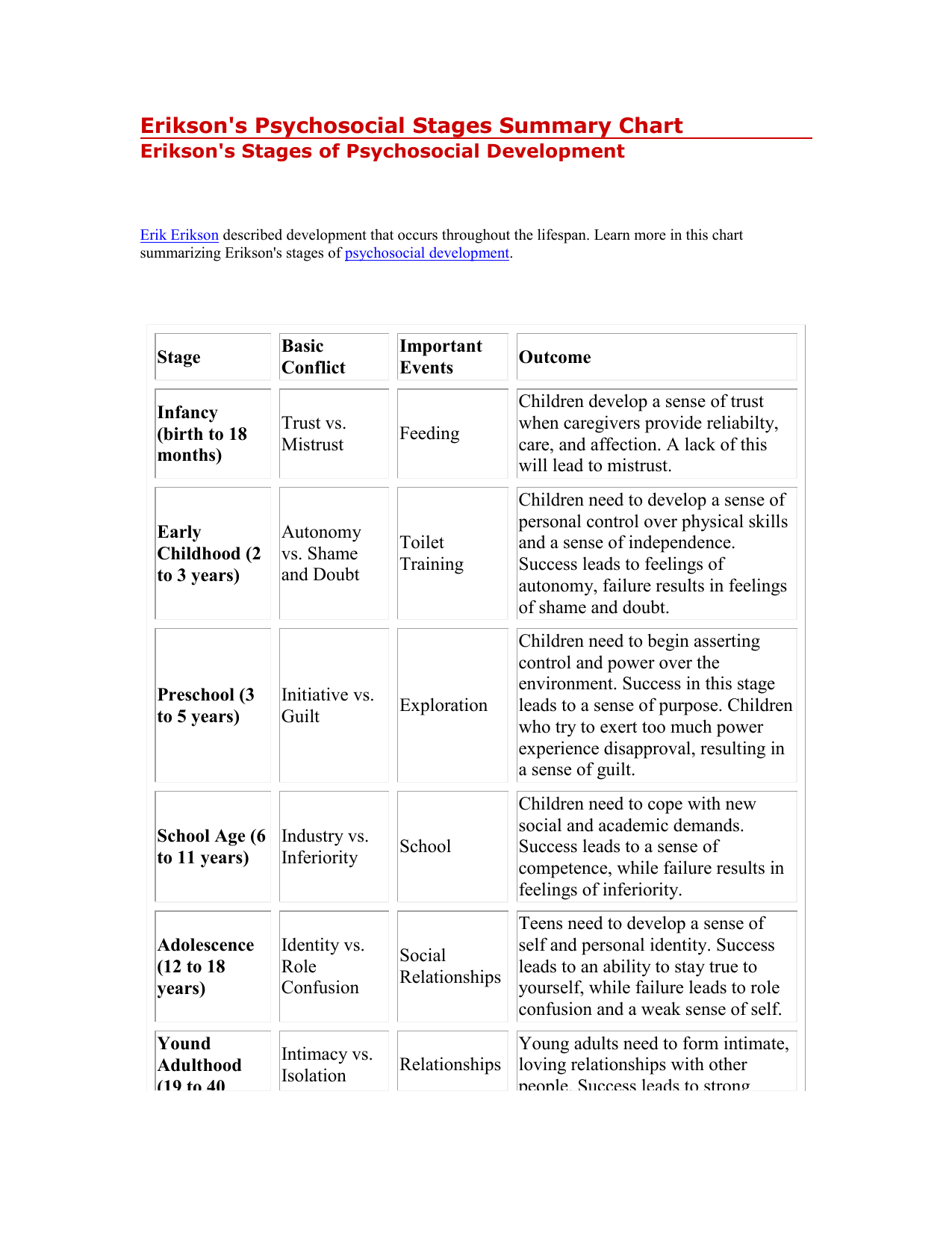
Erikson's Psychosocial Stages Summary Chart
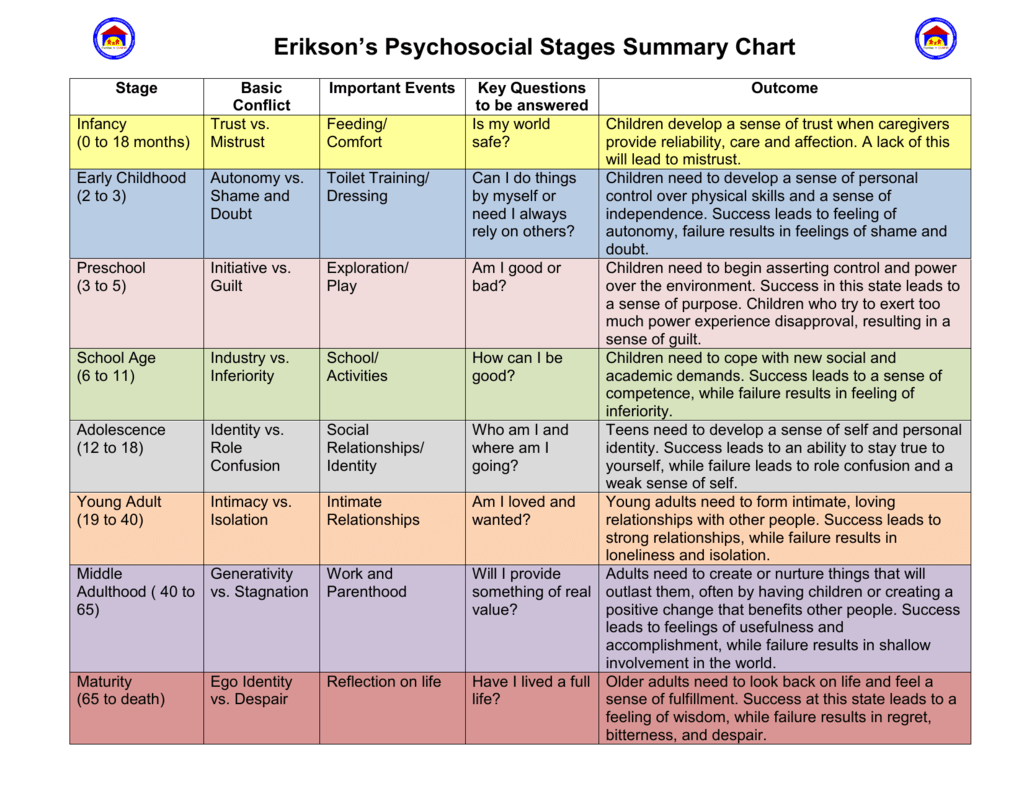
Erikson's Psychosocial Stages Summary Chart

Erik Erikson's Stages of Psychosocial Development
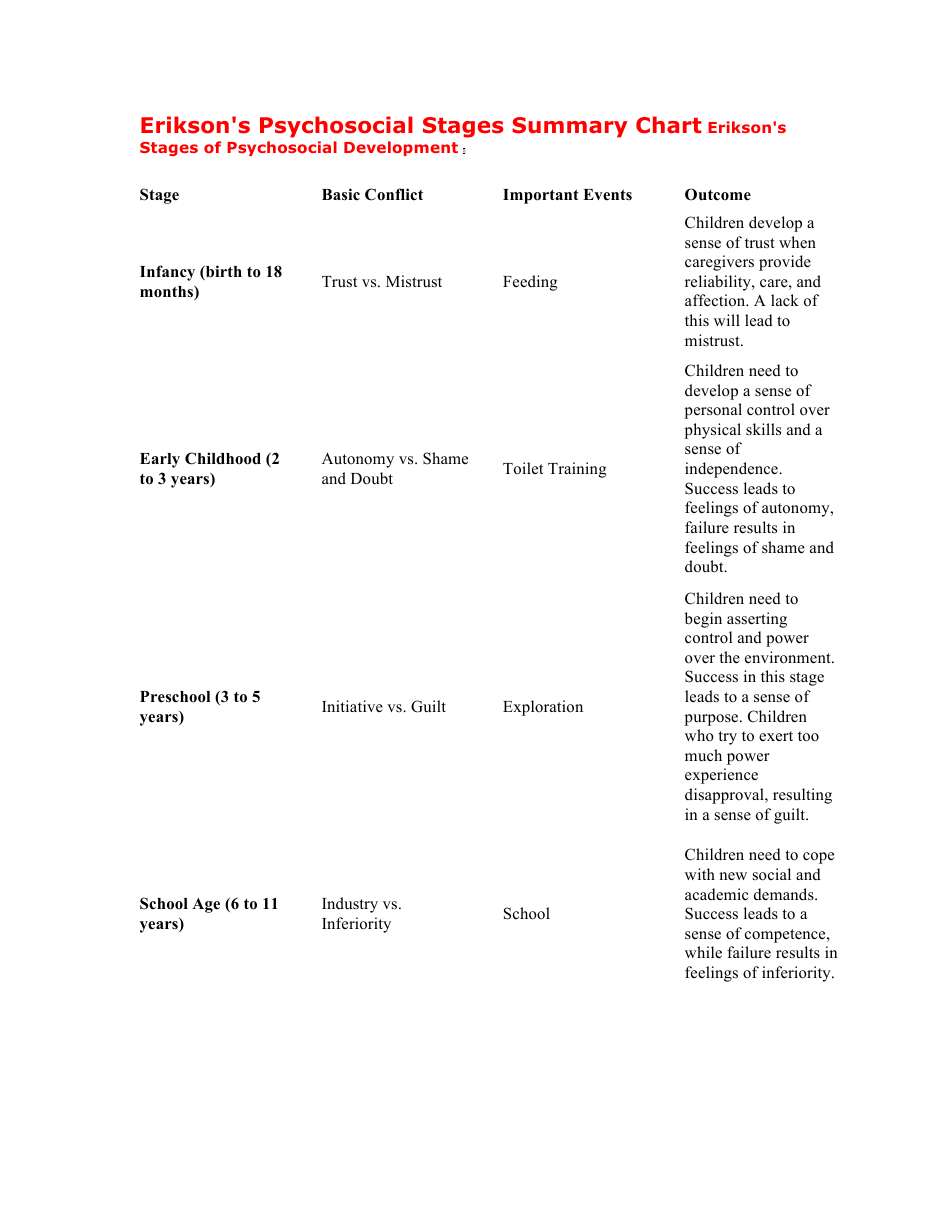
Erikson's Psychosocial Stages Summary Chart Download Printable PDF
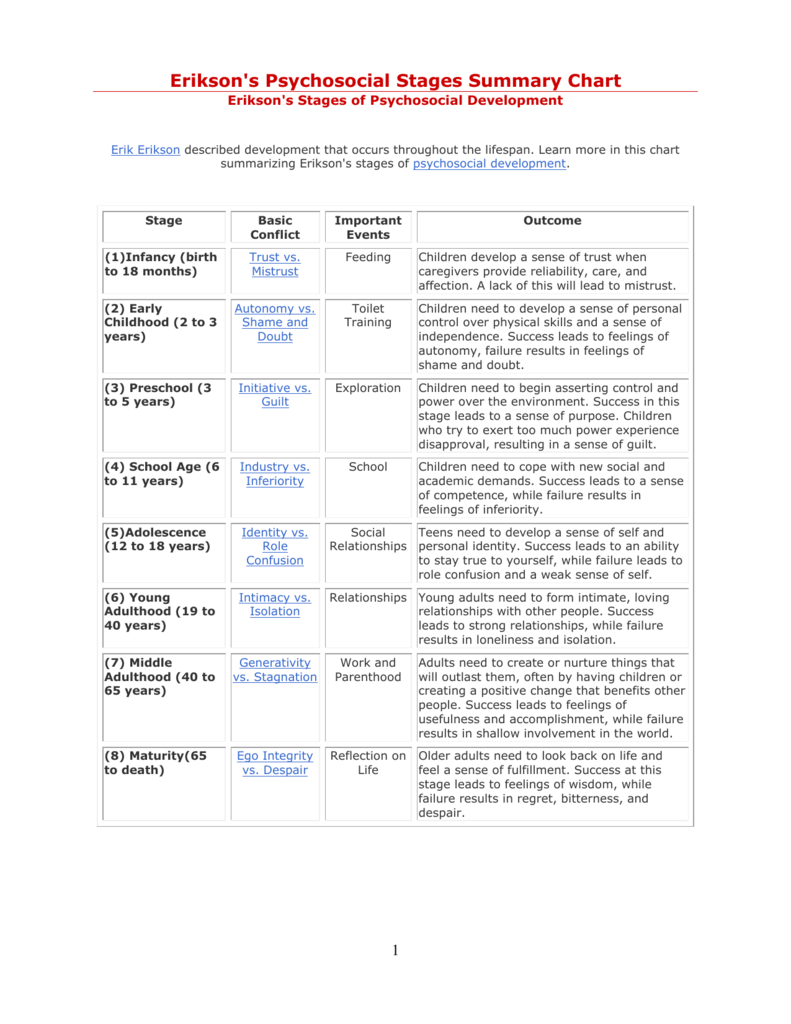
Erikson's Psychosocial Stages Summary Chart
Here Are Stages Of Psychosocial Development:
Thechild's Energies Are Directed Toward The Development Of Physical Skills,Including Walking, Grasping, And Rectal Sphincter Control.
Erikson's Stages Of Psychosocial Development.
Stage Basic Conflict Important Events (1)Infancy (Birth To 18 Months) Trust Vs.
Related Post: